
Future rural support and land use
By the time this blog is published, the Scottish Parliament will be in recess, with campaigning for May’s election in full swing
However, before the end of the parliamentary session, there were some notable government publications relating to agricultural and land use.
The first was the long delayed Rural Support Plan, setting out the support schemes and policies for farming and crofting in the next five years.
Also published was a revised Land Use Strategy, setting out “a vision and objectives to support the development of integrated land use”.
Rural Support Plan
After the UK-wide vote to leave the EU in 2016, the process of exiting was formalised in 2020, meaning that Scotland, along with other UK nations, had to develop its own rural support system to replace the Common Agricultural Policy (CAP).
England pressed ahead early with the development of new environmental schemes such as the Sustainable Farming Incentive, while Wales took a bit longer but now has its own policy, the Sustainable Farming Scheme.
Scotland, meanwhile, has largely stuck with the status quo of legacy CAP structures, particularly direct payments based on the area of land farmed.
Under the terms of the Agriculture and Rural Communities (Scotland) Act 2024, the government must produce a Rural Support Plan every five years. This must set out the government’s “strategic priorities”, including specific schemes, an indicative split of budget across those schemes and the outcomes expected to be delivered.
The first plan covers the period from 2026–31, so in line with the next parliamentary term after May’s election.
The Rural Support Plan confirms that the current allocation of funding for agriculture will continue until 2030–31 when £67m, or around 15% of the ‘Tier 1’ direct payment budget, will move to higher tier schemes – which include things like agri-environment measures, knowledge exchange and advisory support.
Soil Association Scotland has long advocated – including in our 2026 election manifesto – for an increased overall budget for agriculture. However, in the absence of any extra funding, we have also made the case for more targeted support, with more funding for measures that help or reward farmers and crofters for adopting more nature and climate friendly approaches. The way to achieve this is by capping the largest payments (for example those above £100,000) and redistributing that funding to better support small and medium sized farm businesses.
However, waiting until 2030 to start that process of changing the budget allocations represents a lost decade in terms of agricultural policy reform. The next parliament should amend this plan to make the changes much earlier.
Land Use Strategy
It has been interesting to see the media coverage and interest in Defra’s new Land Use Framework for England, and my colleagues have set out what the priorities should be.
In Scotland, we are now onto our fourth iteration of the Land Use Strategy. The first was published in 2011 and was the first of its kind in the world, so Scotland has been ahead of the curve on this. Whether that has brought us any closer to resolving the thorny issues of how we make best use of our land is open to debate, however.
Priorities including food production, climate mitigation and adaptation, increased biodiversity, peatland restoration, renewable energy, tourism, transport infrastructure and housing can sometimes be in competition.
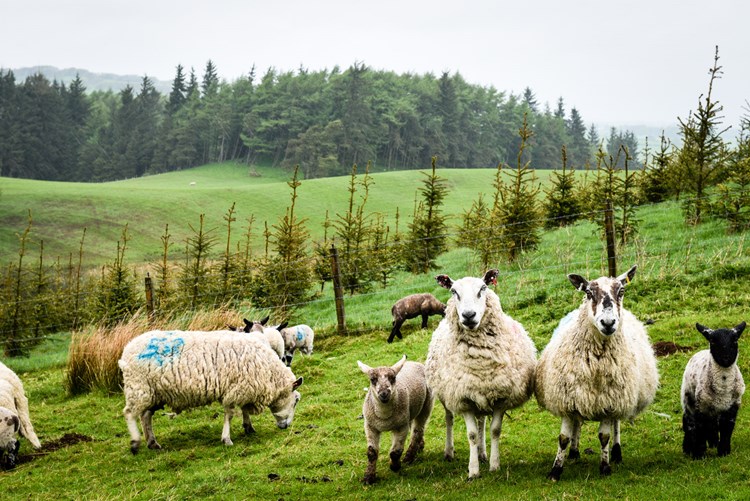
However, there are also many examples of where multiple objectives can be delivered on the same piece of land, for example, tree planting can be combined with agricultural production (agroforestry).
This type of integrated land was overwhelmingly backed by respondents to the public consultation on the latest Land Use Strategy, who also pointed out that the relationship between government strategies, plans, policies and actions “is not always clear”.
That remains the big question about this, and previous versions of the Land Use Strategy. A strategy document doesn’t drive change by itself, but it can help set the direction for policy and regulation that can then incentivise change to happen.
There is a section of the current document on data, aiming to establish a baseline for current land use, and mapping to “visualise Scotland’s land opportunities”. However, there are no projections or modelling of what that change might look like. For example, how much of our farmland could be under agroforestry systems, or what stocking densities in livestock systems might look like in 10, 20 or 30 years' time.
While there is scope for progress to be made through Rural Land Use Partnerships, we have been talking about these initiatives for a long time. It is hard to escape the feeling that we are getting past the point for strategies. It is past time to get into the nitty gritty of what needs to happen to meet the government’s policy objectives on reducing emissions, adapting to a changing climate and restoring nature.
With campaigning for the May 7 election already underway, the answer to those tricky questions is going to have to wait for the next parliament.