

Transforming the Scottish food system together
2026 is a pivotal year for Scotland – and for the Soil Association.
Voters go to the polls on May 7 in a Scottish Parliament election that will lead to the formation of a new government up to 2031.
The upcoming campaign will cover a range of issues from the state of the NHS to the cost of living. And we expect policies relating to climate, nature and health to come under the microscope.
And that’s where the Soil Association comes in. 2026 is also the year when we mark our 80th birthday – and it is clear our work in these areas is more important than ever.
Joining forces
We recently welcomed a group of supporters, funders and guests to an event at the stunning Papple Steading in East Lothian, to set out our vision for ‘transforming the Scottish food system together’.
Generously hosted by George Mackintosh and team, the event included locally sourced and organic ingredients for a delicious dinner, providing the perfect setting for the discussion. The event received high praise from guests who commented that they were “inspired” by the evening and described Soil Association Scotland as “an impressive charity”.
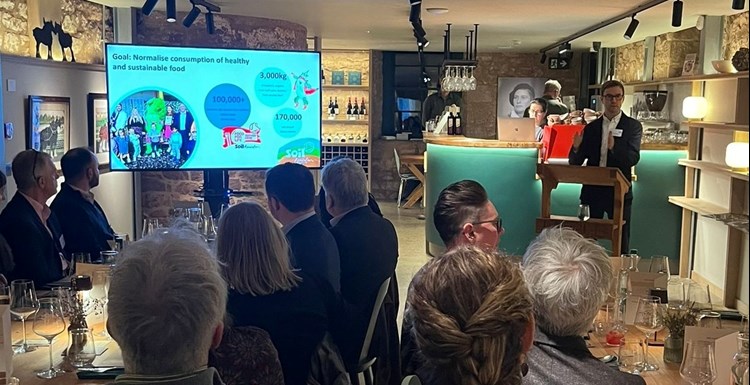
The choice of location was not an accident. There is a wonderful connection between the Soil Association, East Lothian and Papple.
Lady Eve Balfour spent her early years on the estate. After being one of the first women to study agriculture at university, she wrote the seminal classic on organic agriculture "The Living Soil" in 1943 and helped found the Soil Association in 1946.
So it was fitting that we started the event with a reflection on Lady Eve’s desire to help everyone understand and explore the vital connections between soil, plants, animals and people.
Lady Eve was ahead of her time, and the principles discussed 80 years ago are still relevant to our work today.
Our vision for Scotland
The event provided us with an opportunity to set out our vision for the future of the food system in Scotland, focused on addressing three interlinked crises – climate change, nature loss and dietary health.
We see our role as joining the dots between these issues to help build a more resilient and sustainable food system:
Our vision for Scotland: A fairer food system where everyone has access to healthy, sustainably produced food that benefits human health, creates resilient food and farming businesses and revives nature.
We know for example that one in nine Scottish species are at risk of extinction, and that our farmers and growers are facing increasing incidences of flooding and drought as a result of changing weather patterns. There are also concerns about the pace and scale of policies to reduce emissions from agriculture and land use from the UK Climate Change Committee. Meanwhile, one in four Scottish children are overweight while Ultra Processed Foods (UPFs) make up 61% of children’s diets.
Our response to these challenges is rooted in three clear goals:
- Normalise consumption of healthy and sustainable food – with diets focused on high welfare meat and dairy, more fruit, vegetable and pulses and less UPFs
- Increased adoption of organic and agroecological (nature friendly) approaches to food production and land management
- Firmly embedded policies, regulations and legislation to support our vision
Our impact
Across these three areas, we have already demonstrated our impact.
✅Our entry point on sustainable diets has been school food, and through the Food for Life Served Here programme, we are now engaged with half of the local authorities in Scotland, serving more than 100,000 FFLSH certified meals a day (20m total to date). Our Give Peas a Chance! project has shown how we can break down barriers to sourcing more organic food in the public sector.
✅Our farming and land use team have engaged with 700 farmers and crofters since 2022, encouraging the adoption of organic and agroecological approaches and enabling the mindset shift required through peer-to-peer learning between groups of farmers and crofters. Monitoring of our farming programmes suggests 80% of those who take part say they have the confidence to try a new practice on their farm.
✅And on policy, we have helped secure the delivery of the UK’s first funded Organic Action Plan, launched in January this year, while working to ensure organic is embedded in wider policies such as the Scottish Biodiversity Strategy. Uptake of the Food for Life programme is an indicator of success for the National Good Food Nation Plan, while we have also successfully lobbied with partners for capital funding for small producers alongside changes to funding for agroforestry.
From the ground up
We were proud to be joined at the recent event by two speakers reflecting on their experience of working with Soil Association Scotland.
Phil Swire is a mixed organic farmer in Aberdeenshire, inspired by natural farming systems and on a journey to farm hand in hand with nature in order to produce healthy and nutrient-packed food that does not cost the Earth. He is also the farmer who is growing the peas for the Give Peas a Chance project. Phil spoke passionately about his desire to be part of a better food system, for the sake of his own children and others, and for production systems to tread lighter on the environment.
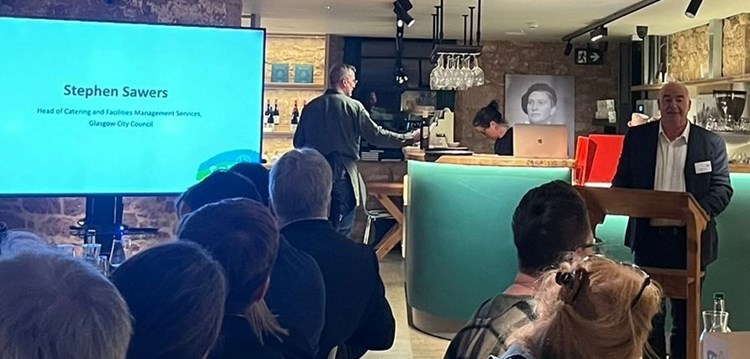
Stephen Sawers is Catering and Facilities Manager at Glasgow City Council, and he talked about the journey the local authority has been on with the help of the Food for Life Scotland team, bringing fresh, local and sustainable food to school pupils whose only freshly prepared and nutritious meal in the day is the one provided by the local authority. Stephen added that he would like to see Scottish First Minister John Swinney mandate the Food for Life Served Here bronze framework as “the minimum standard” across Scotland”.
Next steps
That brings us back to finish where we started. Lady Eve understood how everything is connected. The idea that healthy soils were linked to human health was considered radical in the 1940s, but now it is moving firmly into the mainstream.
To continue our work, and build on what we have achieved to date, we are aiming to raise an additional £145,000 in 2026/27 to drive transformation.
With your support, we are ready to push harder to create lasting change towards a food system that delivers for farmers, for our health, and for nature.
Find out more about how you can join us on our journey by contacting our fundraising team at philanthropy@soilassociation.org