
Bringing British apples to market: varieties, value and viability
Our recent event at Boxford Farms near Chelmsford brought together a small but highly engaged group of growers, farmers, retail buyers and procurement professionals for a day of honest discussion about the future of British fruit production. Our intention was to explore how growers balance variety choice, profitability and resilience, but what made the day particularly valuable was the opportunity to have in-depth conversations in the orchard itself.
With around 15 attendees, the event felt informal and collaborative. The mix of participants from different parts of the supply chain created space for open discussion and practical knowledge exchange, with conversations ranging from genetics and market requirements to fairness in supply chains and the long-term future of UK fruit production.
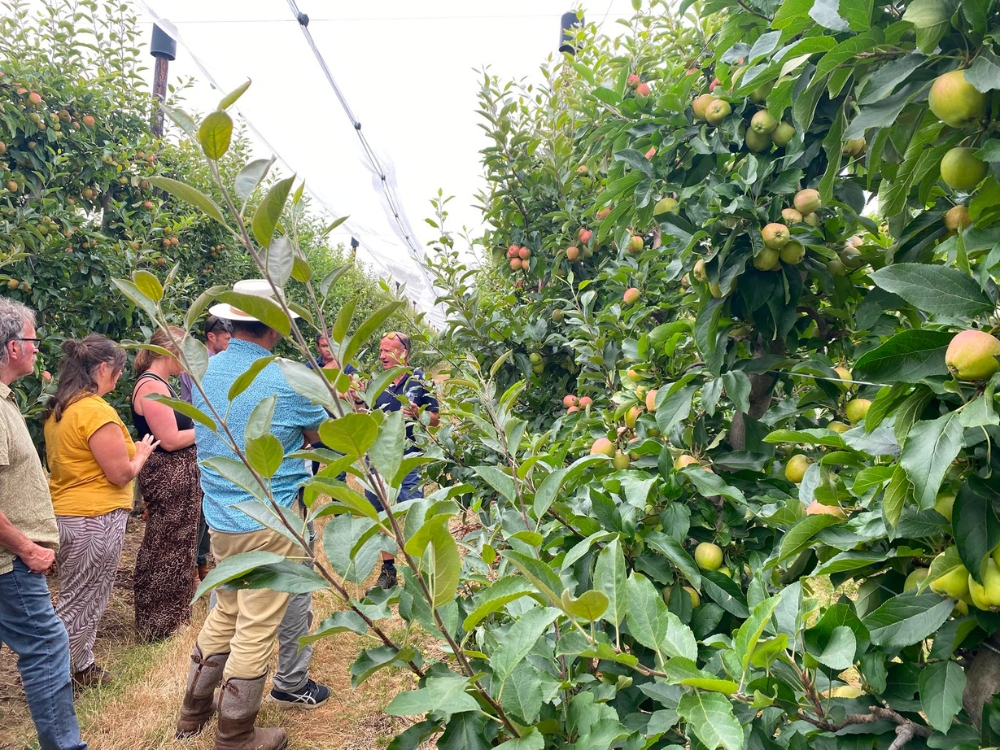
Learning in the orchard
The afternoon farm walk, led by farm manager Robert England, was undoubtedly the highlight of the day. What was intended as a guided tour became an extended masterclass, with Robert generously sharing his knowledge and experience over the course of almost two hours.
Starting in apple orchards planted in 2010-11, attendees were able to see first-hand how variety choice, orchard management and long-term business decisions play out in practice. We also visited cherry orchards during harvest, offering a glimpse into the realities of managing multiple fruit crops within a commercial operation.
One particularly interesting stop focused on orchards that had been re-grafted following the collapse of a retailer contract. This sparked discussion around the risks growers face when market arrangements change unexpectedly, and the importance of maintaining flexibility within orchard systems.
Attendees also saw Magic Star and Braeburn orchards undergoing hand thinning. The discussion around Magic Star highlighted the potential of newer varieties with improved disease resistance, with the suggestion that it can perform particularly well under organic management due to the resistance traits bred into the variety.
The tour also included insight into Boxford's storage infrastructure, including its Dynamic Controlled Atmosphere (DCA) cold store technology, originally developed in Italy, and the role that storage plays in maintaining fruit quality and extending market opportunities.
Variety choice: balancing markets and resilience
A major theme throughout the day was the role of genetics in shaping the future of fruit production.
Discussions explored how breeding priorities are increasingly influenced by labour availability and the need for operational efficiency. One important characteristic is the ability for a variety to ripen within a narrow harvest window, enabling growers to pick the crop in a single pass rather than returning multiple times. As Robert described it, the ideal variety is a 'pick-in-one-er'.
Alongside harvest timing, participants discussed the growing importance of disease and pest resistance within breeding programmes. Modern screening techniques are helping breeders identify desirable traits more effectively, while researchers are also looking further back into original wild and ancestral species to recover resilience characteristics that may have been lost through generations of selection for commercial traits.
The conversation highlighted a key challenge for the sector: how to develop varieties that meet market expectations while also delivering farm-level resilience, reduced inputs and economic viability.
Rethinking heritage varieties
One of the most thought-provoking discussions of the day centred on heritage varieties and what the term actually means.
Participants questioned whether 'heritage' refers simply to age, local adaptation or cultural significance. One perspective offered was that many heritage varieties originated as local seedlings that happened to thrive under particular environmental conditions for example, a Norfolk Royal.
The discussion also challenged some romantic assumptions about heritage fruit. As one attendee observed, some varieties may no longer be grown widely because they are commercially or agronomically unsuitable in modern systems. Rather than focusing solely on preserving older varieties because they are traditional, the conversation explored how growers can evaluate varieties based on practical outcomes including resilience, marketability and ease of production.
This naturally led into a wider debate around who drives variety development. Several attendees expressed enthusiasm for a more 'farmer-first' approach to breeding and variety selection, asking a simple but powerful question: What do growers actually want to grow?
Fair supply chains and the future of production
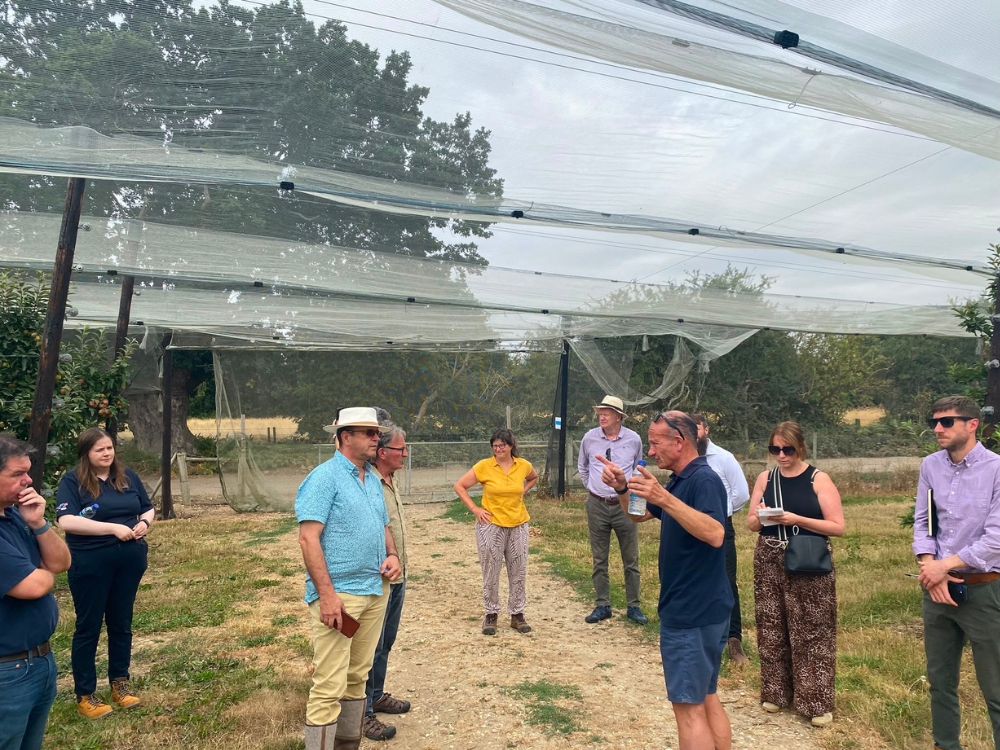
The discussion session that followed moved beyond orchard management into broader questions about the future of the sector.
Topics included consumer expectations, fairness within supply chains and the pressures facing growers as production systems adapt to changing economic and environmental conditions. Questions were raised about whether the industry is prepared for increasing automation and whether current varieties and orchard systems are 'robot-ready'.
These conversations reinforced the interconnected nature of the challenges facing fruit production. Decisions about breeding, orchard design, labour and technology all ultimately influence the viability of farm businesses and the availability of British-grown fruit.
Key takeaways
Small, informal events can create valuable opportunities for deeper discussion and knowledge exchange.
Growers are increasingly looking for varieties that combine market appeal, disease resistance and operational efficiency.
Genetics and breeding will play a critical role in helping orchards adapt to future challenges.
Heritage varieties remain important, but their role should be considered alongside practical production realities.
There is strong interest in more farmer-led approaches to variety development.
Questions around supply-chain fairness, labour availability and automation continue to shape discussions about the future of British fruit production.
The event provided a rare opportunity for growers and buyers to engage directly with one another in the orchard, helping bridge the gap between production realities and market expectations. Most importantly, it highlighted the value of creating space for honest conversations about the opportunities and challenges facing British apple production in the years ahead.