Fashion and textiles

Marketing and labelling guide

Credible certification can fuel your brand's success. Create impact with your marketing and communicate your certified status effectively with our guide to labels, logos and digital promotion.

Why certify your organic textiles?

Consumer attitudes to fashion and textiles are changing fast. YouGov research commissioned by Soil Association Certification highlights the growing importance of sustainability and ethics in consumers’ clothing and fabric choices. 77% of people polled said key elements of GOTS certification were important to them, including organic, natural fibres, fair working conditions and the absence of harmful chemical residues.

70%
shoppers
say sustainability shapes their choices around clothes and textiles
52%
consumers
say organic is important when buying new fashion or textiles

Credible certification can fuel brand success. We have seen this in the sales figures Amazon recently reported for Climate Pledge Friendly products certified to Soil Association standards. In 2025, sales from Soil Association Certification organic textiles clients increased by 10%. And family-owned Leicestershire-based manufacturer 13Amp have seen a 226% increase in GOTS-certified sales.

We’re now into our third year of membership and have seen our sales on organic products considerably increasing – over the past twelve months in particular.

David Wilson Fabric / Technical Manager, 13Amp

What are the requirements for GOTS labelling?

Before using GOTS signs, you must have a Labelling Release Form for GOTS Goods approved by your certification body.

Clear and accurate labelling is essential to maintaining the integrity and credibility of Global Organic Textile Standard (GOTS) certified products.

For businesses, increasing visibility of GOTS certification supports customers’ understanding of the scheme – and by association, your brand's commitment to ethical practices, responsible production and meeting recognised standards.

The Soil Association Certification technical and business support teams have created this guide to help our clients showcase their certified status while meeting GOTS requirements for representation. It helps brands make sure that all references to GOTS certification are correct and helpful for consumers. 

Correct labelling

Organic cotton handkerchief pack with GOTS symbol

Photos on this page provided by LittleLeaf Organic

Correct labelling includes the following details:

  • label grade, for example:

    • organic (95%+ certified organic fibres)

    • organic in-conversion (95%+ certified organic in-conversion fibres)

    • made with x% organic materials (70–94% certified organic fibres)

  • certification body (for example, Soil Association Certification)

  • certification number of the certified entity (GOTS-XXXX)

The accompanying labelling text must be:

  • printed in the same colour

  • font: Frutiger Next Bold font or a similar sans-serif font

Correct logo colour use

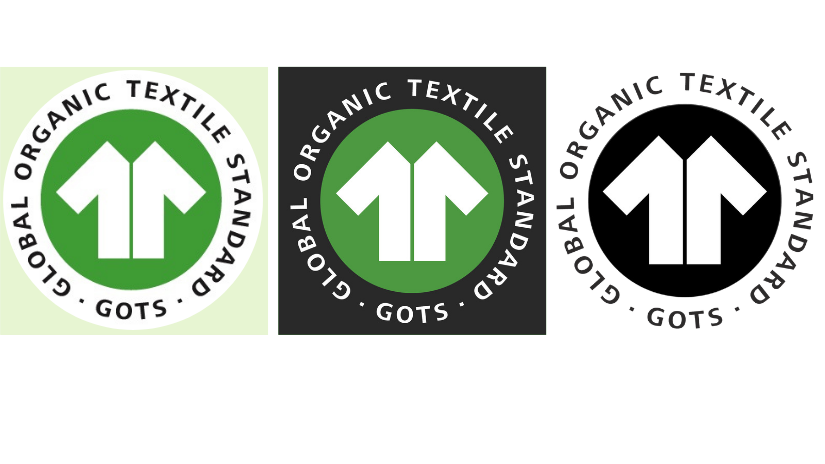
Primary options

Gots Logos Main (1)

Primary (preferred option)

Lettering:

  • print: 100% black

  • RGB: 0 / 0 / 0

  • HEX: #000000

Lettering background:

  • print: 100% white

  • RGB: 255 / 255 / 255

  • HEX: #FFFFFF

  • or transparent (in the background colour of the medium) provided that the font remains legible

Garment symbol:

  • Print: 100% white

  • RGB: 255 / 255 / 255

  • HEX: #FFFFFF

Circle element:

  • CMYK: 80 / 0 / 100 / 2

  • Pantone: 362 C (coated)

  • HKS: 60 N (uncoated)

  • RGB: 63 / 156 / 53

  • HEX: #39C35

Secondary option

Lettering:

  • print: 100% white

  • RGB: 255 / 255 / 255

  • HEX: #FFFFFF

  • font: Frutiger Next Bold

Lettering background:

  • print: 100% black

  • RGB: 0 / 0 / 0

  • HEX: #000000

  • alternatively: Dark (using the background colour of the medium) provided the lettering remans legible

Garment symbol:

  • print: 100% white

  • RGB: 255 / 255 / 255

  • HEX: #FFFFFF

Circle element:

  • CMYK: 80 / 0 / 100 / 2

  • Pantone: 362 C (coated)

  • HKS: 60 N (uncoated)

  • RGB: 63 / 156 / 53

  • HEX: #39C35

Black and white option

Lettering:

  • print: 100% black

  • RGB: 0 / 0 / 0

  • HEX: #000000

  • font: Frutiger Next Bold

Lettering background:

  • print: 100% white

  • RGB: 255 / 255 / 255

  • HEX: #FFFFFF

Garment symbol:

  • print: 100% white

  • RGB: 255 / 255 / 255

  • HEX: #FFFFFF

Circle element:

  • print: 100% black

  • RGB: 0 / 0 / 0

  • HEX: #000000

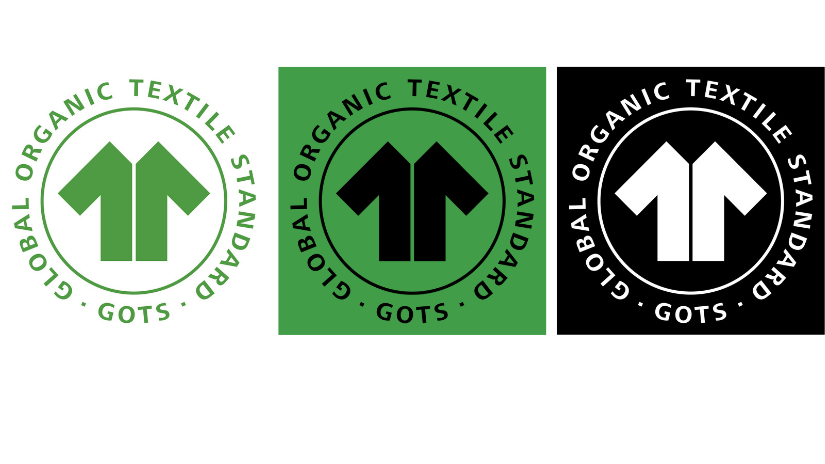
Monochrome options

GOTS Logos Monochrome

Green

All elements (lettering, garment symbol and circle element):

  • CMYK: 80 / 0 / 100 / 2

  • Pantone: 362 C (coated)

  • HKS: 60 N (uncoated)

  • RGB: 63 / 156 / 53

  • HEX: #39C35

Black

All elements (lettering, garment symbol and circle element):

  • print: 100% black

  • RGB: 0 / 0 / 0

  • HEX: #000000

For light-coloured backgrounds where the Primary option is illegible (such as shades of green).

White

All elements (lettering, garment symbol and circle element):

  • print: 100% white

  • RGB: 255 / 255 / 255

  • HEX: #FFFFFF

For dark-coloured backgrounds where the Primary option is illegible (such as black).

How to use GOTS labelling online

How to use GOTS signs on your online store

Use case: You want to use the GOTS logo on a product detail page.

Guidance: All the information displayed on your website or online store must accurately reflect the on-product labelling details. You must not present uncertified and unlabelled products in a way that could imply an association with GOTS signs or certification.

On product detail pages, you must:

  • only display the GOTS logo in direct association with the certified product

  • include the complete accompanying information for each product listed:

    • label grade

    • a reference to the certification body

    • the certification number of the certified entity

Compliant example: On a product detail page for a GOTS-certified product, you display the GOTS logo, label grade (for example, "Organic"), certification body, and your certification number as the certified entity.

How to represent your certified status on your website

Use case: You want to use the GOTS logo on your website landing pages and company information pages.

Guidance: You can use the GOTS logo on your company webpages and in similar contexts if you meet the following criteria:

  • include an accurate statement describing the GOTS scheme

  • include an explanatory statement such as "We offer GOTS-certified products, which are individually labelled" to ensure clarity

  • display the GOTS logo (2.2.1.1), together with a reference to the certification body and your certification number as a certified entity

Compliant example: You add a note like this one to your website, for example on a sustainability credentials page, or product details page: "All our cotton products are GOTS-certified organic. GOTS (Global Organic Textile Standard) products are independently certified as meeting the standards. Our certification body is Soil Association Certification Ltd. Certification number: GOTS-XXXXX."

Using GOTS signs in digital media

Use case: You are promoting GOTS-certified products digitally, for example, in social media posts, online advertisements and email newsletters.

Guidance: You can use the GOTS logo without the accompanying labelling information if the product detail page or similar includes all required accompanying labelling information.

Compliant example: You add the GOTS logo to an email newsletter and link it to a webpage which includes the required accompanying labelling information.

Representing your GOTS-certified status

Use case: You are promoting your business as a certified entity, for example, in an email signature.

Guidance: You can include the GOTS logo if you specify accompanying labelling information:

  • the certification body

  • certification number of the certified entity

Compliant example: You create an email footer which includes the GOTS logo, the name of your certification body and your certification number as a certified entity.

GRTS labelling

The Global Responsible Textile Standard (GRTS) is a globally recognised certification for textiles made with certified responsible fibres. It combines environmental, social and supply chain requirements into one certification. We will provide more information on GRTS labelling as it becomes available.

Questions about fashion and textiles labelling?

Soil Association Certification clients can contact our friendly team today. With over 50 years' certification experience, we are committed to driving a more responsible future for the textiles industry and providing unrivalled customer support.