

Review of the Year 2025
2025 was another busy year for food and farming policy, but 2026 will be even more eventful, with voters going to the polls for a Scottish election in May.
The next parliament will also usher in a changing of the guard, with one third of serving MSPs stepping down. That includes the current Cabinet Secretary for Rural Affairs, Land Reform and Islands, Mairi Gougeon MSP.
But before we bid farewell to those MSPs who are leaving Holyrood, it is worth taking time to stop and reflect on the year that has passed so here is a snapshot of the work that Soil Association Scotland has been engaged with in that time.
January
The year began with devastating wildfires in Los Angeles, a returning President Trump pulling the US out of international climate accords and, closer to home, flooded fields from more extreme weather and farmers protesting in the streets over Labour’s ‘family farm tax’. The annual Oxford farming conferences provided some respite and inspiration, and Soil Association was well represented in a range of policy sessions including on whole farm planning and a session on agroecology ‘across the four nations’ with representatives from England, Northern Ireland and the Scottish and Welsh governments.
February
First Minister John Swinney made a major announcement on future farming policy at the NFU Scotland conference, and it turned out the replacement for the Common Agricultural Policy (CAP) looks an awful lot like the old one. It had already been confirmed that 70% of the budget would sit in direct payments (Tiers 1 and 2 of a new 4-tier system) and Mr Swinney confirmed at the conference that 70% of that would then sit in the Tier 1 base payment, distributed on the same basis as the CAP Basic Payment Scheme. The remaining 30% would be allocated in the ‘enhanced’ tier 2, which for the early years at least will only mean minor changes to existing ‘Greening’ requirements. This felt like a real missed opportunity for the overhaul of the system that was promised by the Scottish Government in its Vision for Agriculture in 2022.
March
Soil Association Scotland was invited to join an expert panel session at the Rural Affairs and Islands Committee that also included climate specialists from Scotland’s Rural College (SRUC) and Edinburgh University as well as the chair of the Farming for 1.5C inquiry. The session covered a wide range of topics, from the current trajectory of Scotland’s agriculture sector towards the economy-wide ‘net zero’ ambition for 2045, the best way to approach climate adaptation, and recommendations from the UK Climate Change Committee on reducing meat and dairy intake and livestock numbers.
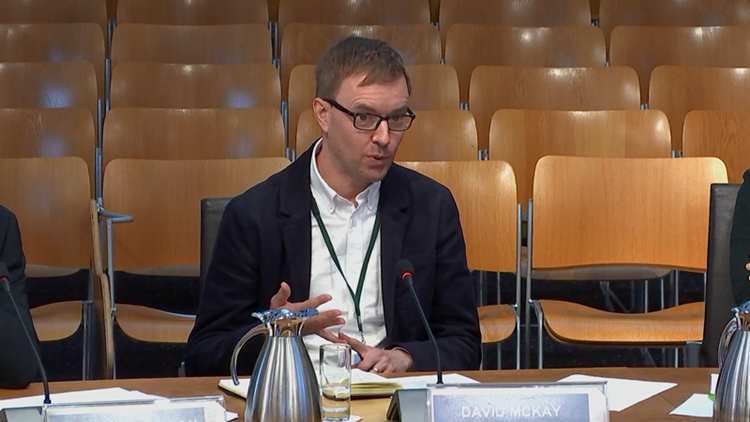
We were able to highlight a range of issues, including the need for baselining and monitoring of environmental outcomes, the importance of a whole farm approach and support for the integration of more trees on farms and crofts.
April
The Scottish Government brought forward its ‘Programme for Government’ – normally reserved for late August after summer recess – and instead launched it in April. The idea was to provide 12 months for Mr Swinney to make his mark with new policy delivery based on four key themes - eradicating child poverty, growing the economy, tackling the climate emergency and ensuring high quality and sustainable public services – before the election in May 2026. Headline points included the commitment to statutory nature targets through the Natural Environment Bill, a new Future Farming Investment Scheme, and the completion of a new Land Reform Bill and a Crofting Bill.
May
In May, Defra published its annual statistics on organic farming, and the results again showed that Scotland is leading the way within the UK in terms of growth in organic land. Thanks to a Scottish Government commitment to double the area of land under organic management by 2026, and policy changes to remove the area cap for conversion, the figures showed six consecutive years of growth. The total organic land area was at 105,000ha, with another 27,000ha in conversion. While this dataset was still quite limited, it painted a positive picture and set the tone for a more detailed publication by Scottish Government in August (for the first time since 2018).
June
Given the looming election in 2026, there was understandably a strong political focus at the Royal Highland Show 2025, as party leaders including First Minister John Swinney spent time mixing with farmers, growers, crofters and the wider agricultural industry at Ingliston.
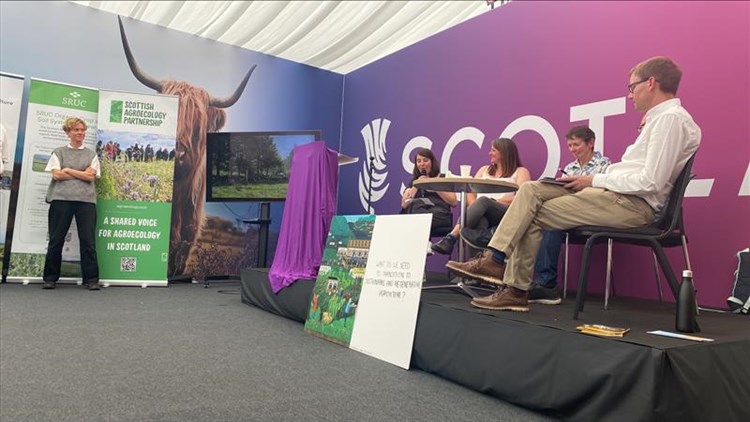
Thanks to NFU Scotland, there was also a chance to hear directly from candidates for election next year representing the SNP, Labour, Scottish Conservatives, Liberal Democrats and Scottish Greens in a ‘big debate’ on Friday morning. And there was a headline grabbing announcement that Scottish Ministers would not be following guidance from the UK Climate Change Committee on reducing livestock numbers.
July
The first National Good Food Nation Plan was laid before parliament, fulfilling a requirement of the 2022 Good Food Nation Act. Two committees of MSPs – the Health, Social Care and Sport Committee and the Local Government, Housing and Planning Committee issued a call for views. This made sense but given the cross-cutting nature of a national plan on ‘good food’, we expected more wide-ranging scrutiny. The Rural Affairs and Islands (RAI) Committee, which has within its remit ‘farming and crofting’ and ‘food and drink supply chains’, seemed an obvious omission and felt like a missed opportunity, but also a failure of parliamentary process. We continued to make representations through the Scottish Food Coalition to ensure the food plan gets the scrutiny required to ensure it is as effective as intended in the legislation.
August
MSPs returned from summer recess after a summer in which many farms completed an early harvest. Most winter cereals and oilseed rape crops were already in by the end of the month, at the same time as farmers and crofters were informed that they would see a modest reduction in support payments, after the Scottish Government confirmed the 2025 rates for the Basic Payment Scheme and Greening payments. This of course comes on top of ‘real terms’ reductions in agricultural support due to inflation, which increases the pressure on farm businesses at a time when they are being asked to do more in terms of climate and biodiversity.
September
The Scottish Agroecology Partnership (SAP) held a rally outside the Scottish Parliament, calling on the Scottish Government to deliver on that promise of a just transition for agriculture. The SAP is a new and growing alliance of organisations in Scotland – representing more than 3,000 farmers, crofters and landworkers – and was launched at the RHS in June.
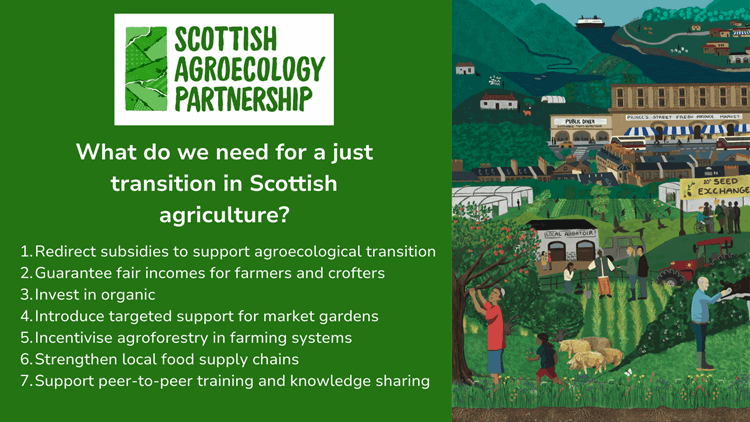
The alliance includes Soil Association Scotland, Nature Friendly Farming Network, Landworkers Alliance, Scottish Crofting Federation, Pasture for Life, Nourish Scotland, Propagate and the Food, Farming and Countryside Commission. The SAP set out a list of seven key policy asks that were shared with MSPs and staffers at the event.
October
A new report from Food Standards Scotland (FSS) and the University of Edinburgh (UoE) reignited what can often be a polarising debate around climate friendly diets. The study followed on from UK CCC recommendations that average meat and dairy consumption should decline by 20% by 2035, rising to 35% in meat by 2050 compared to 2019 levels. The FFS/UoE research specifically modelled the impact of reducing meat and dairy on nutrient intakes amongst children and young people, in addition to the impact it would have on greenhouse gas emissions. Farming industry figures were quick to comment on the report, emphasising the importance of red meat in a balanced diet. And while the findings certainly back that up, there was, as always, more nuance and complexity in the detail of the report.
November
Around 150 people joined a sold-out Scottish Organic Gathering at the Bowhouse, Balcaskie Estate in Fife. There was real energy in the room with a wide-ranging audience of farmers and growers, food businesses, supply chain and public sector stakeholders, academics, government officials and representatives of non-government organisations.
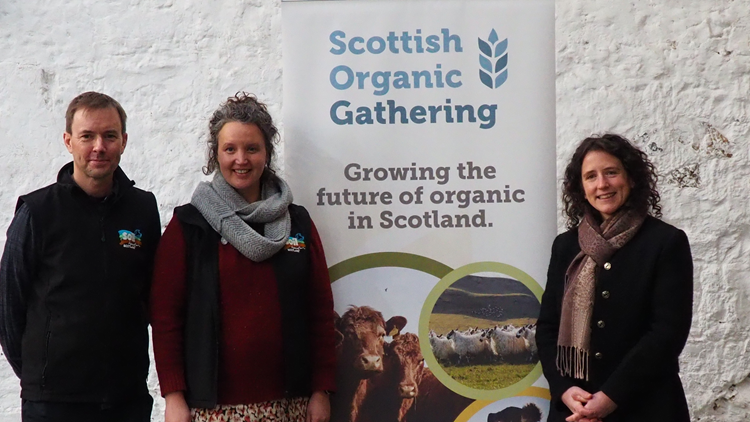
The joint Soil Association Certification and Soil Association Scotland event underlined the growing momentum around organic in Scotland, capped with an announcement from the Cabinet Secretary Mairi Gougeon that £200,000 in funding was being provided to Scotland Food and Drink to lead the first year of work on a new Organic Action Plan, something that Soil Association Scotland has been pushing for since the start of the parliamentary term.
December
It was great to see the media pick up on the launch of the new Scottish Organic Producer Board. There was coverage in the Scottish Farmer and the Press and Journal of the election of the first chair, Sarah Morbey, of Coldwells Farm, Aberdeenshire.
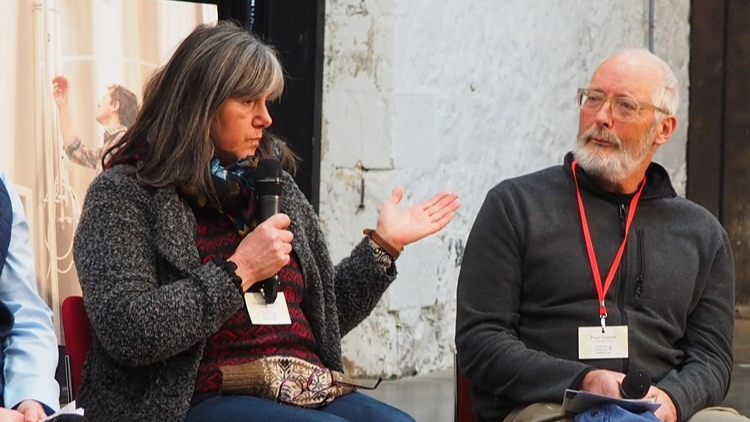
The new board will advise us on current and future priorities for the Scottish organic sector, provide a “sounding board” for Soil Association policy and campaigns, ensure that organic farmers, growers and food producers' needs and concerns are addressed by the Soil Association and the wider organic movement, and advise the Soil Association Executive and its Board of Trustees.
Looking ahead to the New Year, there is plenty of policy work still to focus on before the end of this parliamentary term. This includes responses to consultations such as on the draft Climate Change Plan. And Soil Association Scotland will also be publishing its own manifesto for the 2026 elections early next year. Until then, we wish you all a great festive break and a Happy New Year.