Organic Action Plan for England: a national opportunity
The newly launched Organic Action Plan for England (OAPE) is a huge opportunity for the country. The Soil Association has been heavily involved in supporting the government to develop the plan. Inspired by success in Scotland, here are our recommendations for the UK government and the sector.
The Soil Association has long championed an Organic Action Plan for England. For decades we've been working collaboratively with organic farmers and businesses, researchers, our members, government and partners to show how coordinated action can:
remove barriers in the supply chain
help farmers meet rising demand
deliver healthier soils and more biodiversity
create more resilient food production
reduce reliance on synthetic inputs
The government’s Farming Roadmap 2050: Growing England’s Future (published June 2026) recognised “the proven benefits of organic production for the environment, through improvements to water quality, soil health, biodiversity, carbon emissions, and animal welfare.”
A comprehensive action plan will serve to focus efforts, combine resources and supercharge the opportunities for growth.
The moment for action
England has not had an Organic Action Plan for a generation.
During that time, the evidence for organic farming has strengthened, public demand has grown and other European countries (alongside an example closer to home in Scotland) have used coordinated plans to give farmers, businesses and retailers the confidence to invest. England now has the chance to turn decades of ambition into delivery.
The prize is substantial. England’s organic market has doubled in a decade, with the potential to more than double again over the next decade. Yet organic farmland has barely moved. People in the UK want more organic, but too much of that demand is currently met by imports – a major missed opportunity.
A market growing without its farmland
Only 3.4% of England’s farmland is organic. A target of 10% would almost triple the current share, helping to deliver national goals for biodiversity, soil health, climate resilience and nature recovery while supporting growth in rural and urban communities.
Across the EU, growth in organic sales has broadly tracked growth in organic land, which now accounts for 11.1% of farmland. In the UK, retail sales have risen while organic land has flatlined.
That disconnect means increasing demand is too often met by imports rather than British production. It is a missed opportunity for food security, farm profitability and the wider economy.
Our recommendations for the Organic Action Plan
Growth must move on 3 fronts
A successful plan must grow production, infrastructure and demand together. Farmer conversion and maintenance support alone will not work if processors, abattoirs, packers and buyers cannot handle the extra output.
Equally, better infrastructure will not deliver lasting growth unless consumers, public-sector caterers and export markets are ready to buy. International experience shows that neglecting any one side of this triangle creates bottlenecks, volatility and lost value.
Our recommendation: Join the dots between farmer support, routes to market and consumer awareness to make sure organic becomes accessible, available and affordable for all in society. Support sector working groups to identify their barriers and opportunities, with access to funding to accelerate structural changes.
Different sectors, different jobs
There is no single route to 10%. Arable, dairy and red meat are likely to do most of the heavy lifting on land-use change.
Horticulture can expand significantly and replace imports – particularly in glasshouse crops such as tomatoes, cucumbers and lettuce – but its smaller land footprint means its contribution will lean towards increasing domestic supply and boosting national food security.
Market gardens add value that conventional retail measures often miss:
shorter supply chains
community connections
skills development
routes into farming
Our recommendation: Support growth in organic market gardens as well as farms. Doing so would strengthen local economies and communities while creating essential skills hubs to nurture the farmers of the future.
Build from England’s regional strengths
Nearly half of England’s organic farmland lies in the South West, where organic already accounts for around 8% of farmland.
Reaching 10% there would require an additional area roughly the size of the Isle of Wight. That makes the region an obvious place to build a stronger organic cluster – linking farms, processing, skills and routes to market.
Elsewhere, organic can support place-based priorities in protected landscapes, water catchments and nature-recovery areas.
Our recommendation: Build on regional hubs to link up farms, processing capacity, skills and routes to market. Doing so will capitalise on existing infrastructure to deliver quicker wins.
Demand has doubled in a decade
Organic is already mainstream. 4 out of 5 households buy it at least once a year and around two-thirds buy every three months. Increasing average purchasing frequency with just 3 additional trips could translate into roughly 18% market growth. Small, practical nudges can therefore make a large difference – but retail is only part of the picture.
Export growth is another largely untapped opportunity: the available modelling suggests organic exports could rise from an estimated £220 million to more than £600 million. Better market intelligence and organised trade support would help turn that potential into sales.
And public procurement can create dependable volume while delivering wider public value. In Bury, 56 local-authority schools achieved Food for Life Gold Certification; 35% of their food came from within 20 miles and organic ingredients accounted for 25% of spend, without increasing overall costs.
What an Organic Action Plan for England must do
set a clear national ambition: Commit to 10% organic farmland and translate it into staged, sector-specific growth pathways
back farmers for the long term: Provide reliable conversion and maintenance support, avoiding boom-and-bust cycles
invest in supply-chain infrastructure: Target processing, storage, distribution and coordination where market leakage is greatest
grow domestic and export markets: Support consumer activation, import substitution and a stronger British organic presence overseas
use public food to create demand: Expand organic sourcing in schools, hospitals and other public settings
create an organic data observatory: Track production, trade, demand and regional capacity so businesses can plan and the plan can be held to account
empower sector and regional partnerships: Give producers, processors, retailers, caterers and traders the means to solve practical bottlenecks together
blend public and private finance: Use investment mechanisms that reward measurable changes in farming practice and environmental performance
From ambition to delivery
England does not need another strategy that stops at aspiration. It needs a practical programme that connects what farmers can produce with the infrastructure and markets needed to sell it.
Done well, an Organic Action Plan would be more than a farming policy: it would be a growth plan for resilient businesses, healthier landscapes, stronger local economies and a more secure food system. The evidence is there. The task now is to organise around it and act.
Resources and further reading
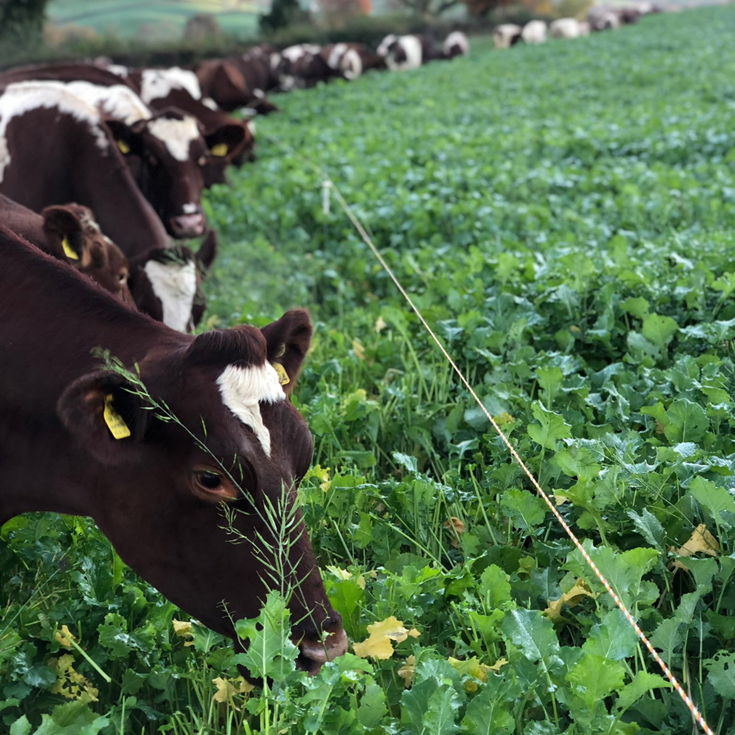

Organic farming leads evidence base on biodiversity and soil health
A major government-backed review examined how organic farming and other assurance schemes contribute to the government’s Environmental Improvement Plan (EIP) goals. It found that organic farming currently had the strongest evidence base for delivering those goals in practice.