Green Light for Growth: Learnings from the Organic Trade Conference 2026
Organic is entering a new era of opportunity. Soil Association Certification’s flagship organic event explored ways to turn momentum into market growth. In this article, Commercial and Marketing Director Alex Cullen summarises key insights from the day.
When it comes to organic, the green shoots we’ve seen over the last few years are now in firm growth. Consumer demand is growing, retailer interest is strengthening, and across the UK, there is increasing recognition of the role organic can play in delivering climate, nature and health outcomes.
A major opportunity for organic
This week's launch of the Organic Action Plan for England marks the biggest shift in organic policy for more than a decade.
The UK’s organic market has doubled in the last 10 years, but while demand for organic food and drink in the UK has grown, organic land figures have stagnated at 3%. Currently, increased demand is largely being met by imports. We now have a huge opportunity to boost food security while benefitting UK farmers and making headway on the government’s Environmental Improvement Plan (EIP) goals.
With all this in the zeitgeist, it was such an exciting time to come together in London for a day of inspirational talks, workshops and networking.
Our aim for the day was that delegates would leave with their own Organic Action Plan: actionable insights to grow their organic business and support a thriving sector. Keep reading, and you can build yours from our key takeaways and free downloadable resources – whether you were able to attend or not.
Bringing the sector together

The ambition for increased farmland is a powerful one for what it could mean for our environment, our soils, our wildlife, our livestock. But we also know each sector will have different roles to play.
Organic is a team sport. Consumers rely on certification bodies to enforce the standards they’re looking for. Retailers put the right product in the right place at the right time, to capitalise on opportunity. Regulation enforces the rules, and policymakers have a role to play in removing barriers and boosting growth.
At the heart of it all are the businesses: the growers, producers, processors, storytellers and operational network making sure great products go where they are wanted and needed.
We are stronger together. That’s why it’s so important that so many businesses came together in force to connect at this, the organic event of the year. We can capitalise on the opportunity we have to grow the organic sector as a whole – if we do so in collaboration.
Highlights from the day
We kicked off with an exclusive video message announcing the launch of the Organic Action Plan for England (OAPE) from Stephen Morgan MP. He described how the Organic Action Plan for England "sets out how the government and the organic sector will work together over the next ten years and beyond, with a clear focus on growth."
Organic is a priority for this government and we recognise the contribution the sector can make to profitable farming, a healthier natural environment and growth across the food supply chain.
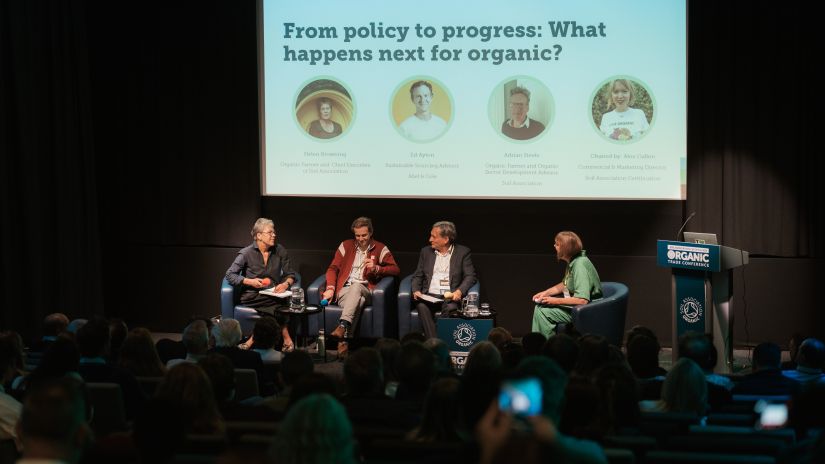
From Policy to Progress: What Happens Next for Organic?
Panellists explored the opportunities the newly announced Organic Action Plan for England creates for businesses and farmers, where the barriers to growth remain, and what industry needs to do next to ensure the plan delivers lasting impact.
Soil Association's Helen Browning and Adrian Steele, and Ed Ayton, Sustainable Sourcing Advisor at Abel & Cole, touched on resilience in the supply chain, the importance of data insight, and the remaining barriers to conversion.
Innovation was a recurring theme in the day's discussions. Helen Browning reminded us that diversifying diets and a changing climate could and should mean that farmers can move away from traditional crops. We also heard how retailers can drive growth through newness, novelty, and encouraging small, groundbreaking brands.
Key takeaway: Innovation is key. Organic shoppers tend to be more adventurous, and range and choice matter. Consider what your business can offer beyond the usual organic staples.
The state of organic in retail
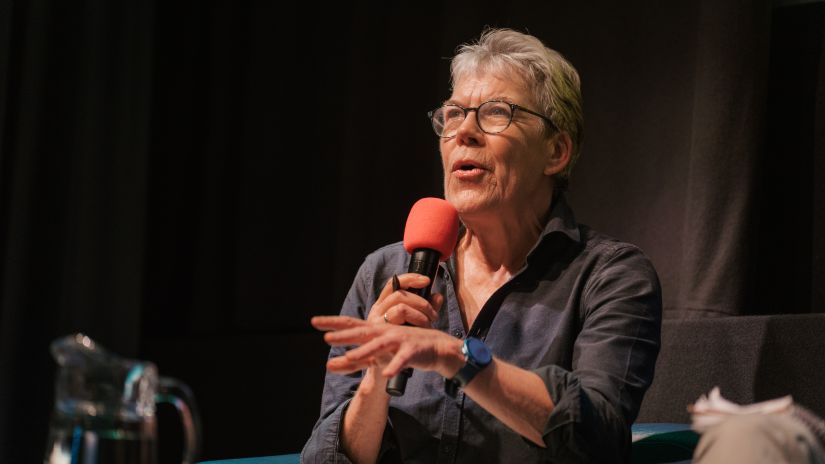
Mike Watkins, Head of Retailer and Business Insight at NielsenIQ kicked us off with an essential overview of organic performance across UK retail, exploring changing shopper behaviours, category trends, retailer activity and the wider forces shaping the market.
Mike noted that organic has outperformed the total market for 12 of the last 14 years, and particularly the last 3 years. People are not only spending more than they were; they’re also putting more things in their basket.
Nutrition is a key driver of future growth in this sector. While the cost of living remains the number one concern for consumers, health is important to shoppers. There's an underlying shift away from processed foods and towards fresh food prepared at home.
Retailers are increasingly looking to widen their range across health and nutrition and that does and should include organic. Organic sales in supermarkets grew by 7% in 2025 to reach £2.6 billion. That growth has continued into 2026, with the latest figures showing that organic continues to remain ahead of the total market across both value and volume, confirming there is increasing shopper demand.
Volume growth across major retail organic food and drink sales was at 1.5% in the 52-week period ending 26 September 2026: 5 times the growth rate of conventional at 0.3%. Organic food and drink sales continue to outpace conventional in value growth as well, at 5.9% vs 3.5% growth. [1]
Key takeaway: Despite continued growth, organic still represented just 1.6% of total food and drink sales in 2025, highlighting the significant opportunity.
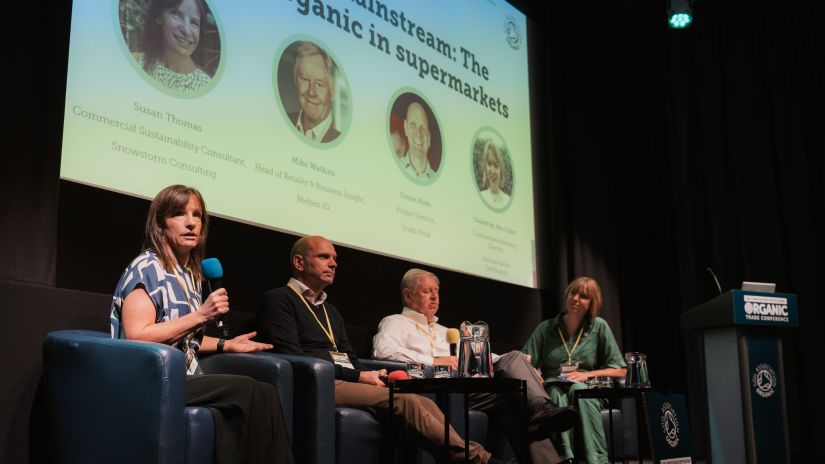
From niche to mainstream: The future of organic in supermarkets
Mike then joined the panel discussion along with Commercial Sustainability Consultant Susan Thomas, and Simon Hinks, Product Director at Ocado Retail.
Their advice was that organic can help address many of the challenges consumers and retail buyers are seeking to solve. The term 'organic' offers a powerful shortcut, bringing together solutions to a wide range of customer concerns under a single, trusted term. That simplicity is one of its greatest strengths.
Key takeaway: The organic community should consider how organic already helps address many of the issues emerging today, and how to communicate the ways organic can solve customers' problems.
New for 2026: Breakout sessions
The breakout sessions gave delegates a chance to focus on the topic that most supported their business, whether in marketing and PR, ways to get retail buyers to back their brand, or understanding more about the opportunities for export to scale organic and support food sovereignty in the UK.
Breakout 1: Making organic newsworthy
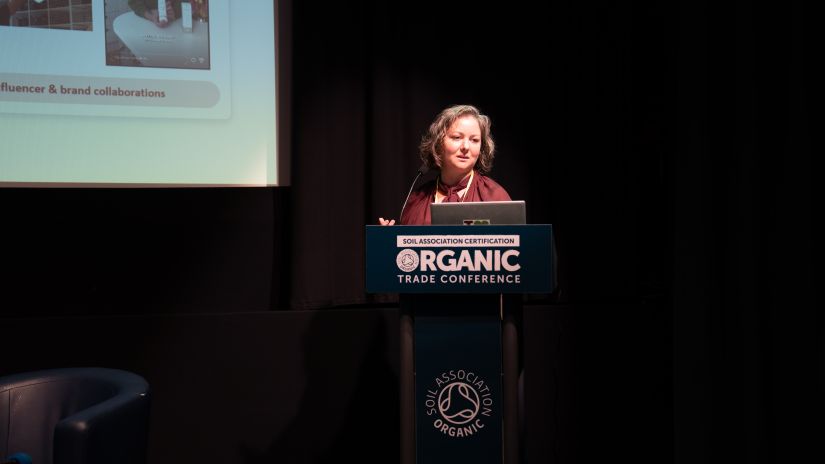
At Soil Association Certification we’ve proven how focused PR and marketing activity can attract the attention of journalists. In 2026, we had one of the strongest Organic Septembers on record, gaining coverage for organic in the likes of The Daily Mail, Times, Independent and Country Life. Across socials, collaboration was key, and we saw our clients working both with influencers and with other brands.
In this session, PR, brand communications and social media consultant, Liz Williams, and Niamh Noone, Head of Marketing at Soil Association Certification, explored how to turn your organic story into a compelling opportunity for journalists. They explained how to:
tap into emerging consumer trends
focus on seasonal moments (Christmas, New Year, summer and September)
collaborate with other brands and sector campaigns
They took us through creating an unmissable hook and provided a tick list to make sure your press releases get noticed – everything you need to make the kind of media splash that we’ve seen becoming more frequent for organic over the last year or two.
Key takeaway: Capitalise on key organic moments in the calendar, like the launch of the Organic Market Report, Wake Up to Organic in May, and Organic September.
Breakout 2: Nailing your buyer pitch
Understand the power that’s in your hands. You get to decide who to sell to.
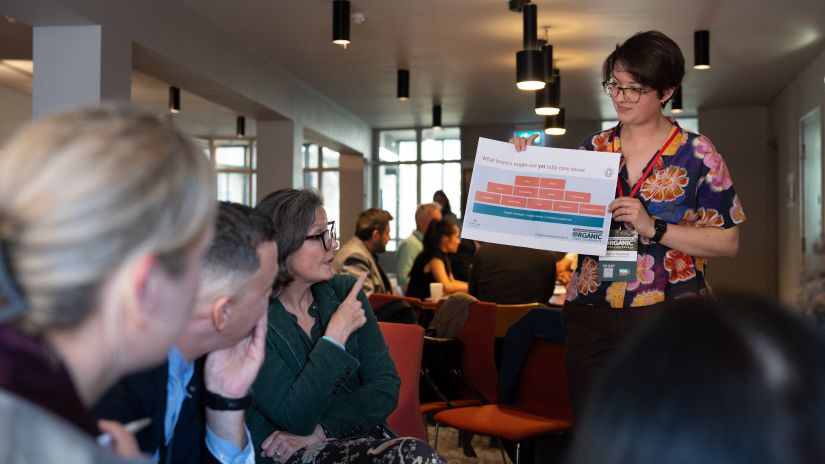
In this practical workshop, food industry commercial expert Susan Thomas helped businesses refine how to get retail buyers to say ‘yes’. Susan cautioned brands to know their numbers and understand the buying world – where KPIs are often focused on growing revenue, securing long-term supply, managing risk and reducing waste.
We know that organic is a brilliant solution to so many of the problems we’re facing, but Susan asked attendees to flip the narrative. Instead of leading with the benefits of organic, she advised brands to focus on the benefits to the buyer. For example:
resilience on the farm means more resilient supply chains
not depending on synthetic fertilisers creates a more predictable cost-base
Tip: With regenerative gaining recognition amongst retailers as a possible solution, make sure you can describe how organic is regenerative. It is comprehensive, verifiable, and legally protected – making it the benchmark for regenerative agriculture. Our Organic and Regenerative resources are a great starting point.
Key takeaway: Keen to get the attention of retailers? All retailers are different – they're working to different restrictions, parameters and brand values. Start with research, to find the right person at the right company. Smaller retailers with a strong regional focus could be your way in.
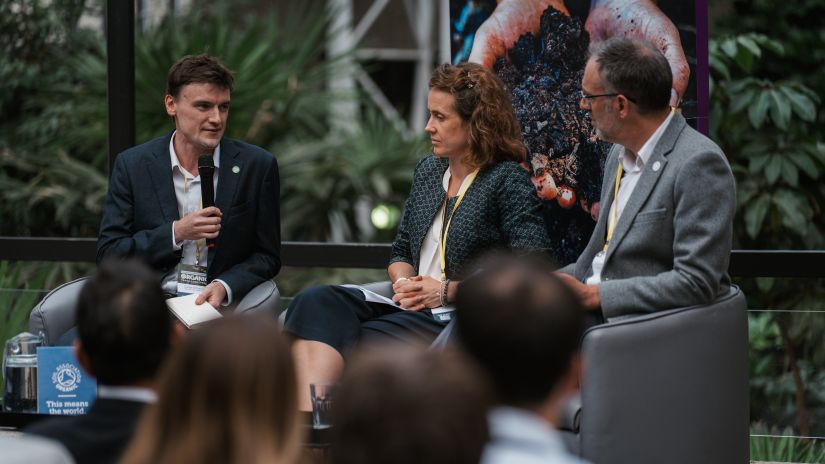
Breakout 3: Growing organic beyond the UK
We’re at a crucial moment for organic. A new Organic Action Plan for England and closer export alignment with the EU under the SPS agreement should in practice mean increased support and reduced barriers to trade.
The UK is an import-focused country. This session asked how we start to turn our attention outward, compete with wider global markets, and create enough supply to build resilience into our own food system.
The panel explored how Ireland has successfully used export growth to strengthen its organic sector. We heard about the Irish Organic Action Plan, and the nation’s strategy to supply domestic demand before boosting overseas trade by targeting certain markets. Starting with quick wins (like organic Irish beef, which already has momentum and scale) they have been able to learn quickly – all while dramatically increasing organic farmland.
Key takeaway: The launch of the Organic Action Plan comes as barriers to EU trade should ease for organic businesses under the SPS alignment, bringing with it further opportunities for the export market.
Presentation slides
Download resources from the day, to help you build your own Business Organic Action Plan:
3 actions to take today
Now that the Organic Action Plan for England has been announced, it’s over to us as a sector to make the most of this opportunity. The plan launch is only the beginning – it's now down to us to help embed it, and its impact on the future of organic. Please ask your local MP to do the following:
Step 1: Ask your local MP to write to the Secretary of State for Environment, Food and Rural Affairs
Welcome the Organic Action Plan and ask that support for organic conversion and management is reinstated at the earliest opportunity, with a ring-fenced budget. This must be a core pillar of the Organic Action Plan for England, which was developed with farmers, businesses and environmental experts.
Step 2: Ask your local MP to commit to visiting an organic farm
There, they can explore how organic farming will help deliver the Farming Roadmap 2050 and the Environmental Improvement Plan. Don’t know of a farm nearby? Contact us, as we may be able to put you in touch with a nearby Soil Association Certification client. We also work with Yeo Valley to produce on-farm experience days.
Step 3: Get involved in your industry
Organise a sector roundtable. Bring stakeholders together for a structured discussion on the issues that affect everyone in the room: local organic and converting farmers, food businesses, public-sector buyers, environmental groups and training providers. Focus on practical barriers and investment opportunities and ways to increase your UK sourcing.
For organic businesses - have your say
Please complete our survey to help us gather as many representative voices as possible. This helps inform our annual Organic Market Report as well as initiatives to support our clients and the organic sector. In addition, industry insights support our asks to government as they shape the outputs of the Organic Action Plan for England.
Alex Cullen