What to consider when converting to organic
Converting to organic means moving away from synthetic inputs and adopting a whole-farm approach to your farming system. Read our guide to the process of getting certified, applying for funding, and the financial opportunities of converting to organic.
Farming is more than a job – it's a way of life that comes with a set of challenges that those outside of the farming world often don't fully understand. If you're considering going organic, you may not be aware of the support available – whether that's technical support for how to go organic, government funding support, or consumer support for organic.
This article outlines the process of converting your farm to organic, how to approach funding applications, and how to connect with other farmers who are already on their organic journey. We'll also provide insight into the current market demand for organic.
What got me interested in farming was thinking about where food comes from, how it's been grown, and what's in our clothes and skincare products. Right from the outset, I wanted to produce food and fibre in a non-toxic way. The more I learned about organic farming, the more it made sense to me that working with nature was the best way to achieve that.
How to get certified organic in the UK
At Soil Association Certification, we often hear that farmers and growers are unsure whether converting to organic will be too complex and involve lots of paperwork, but the process is relatively simple.
We offer practical support and clear resources throughout conversion and certification, plus joint inspections with other schemes to cut down on the admin for you, including:
Red Tractor
Farm Assurance
Pasture for Life
1. Apply
Email, call or submit an online enquiry and we'll send you some forms to complete. You can start conversion from the day we receive your completed forms. You'll complete a management plan and submit it to us for approval – this becomes your business blueprint.
2. Start your conversion period
How long is the conversion period for organic farming?
The standard conversion period for the land in organic farming is 2 years. The crops sown and grown after the 2-year conversion can be sold as organic, except for perennial crops, which take 3 years from when originally planted. You can convert your farm in stages or all at once.
Inputs
During the conversion period, you need to keep your farming system according to organic standards. This means using Approved Inputs. Whether on grassland or crops, we can help support and guide you towards suitable inputs for use in organic farming.
Livestock
Livestock can convert simultaneously during the first 2 years of land conversion, or once the land has reached organic status. Existing breeding stock can then go on to produce organic offspring. Read our organic conversion guides for more detail.
3. Schedule your first inspection
We'll call you to arrange your first inspection, which is an opportunity to highlight any changes you need to make. After your inspection, we'll issue a report and may request further information from you.
4. Achieve certification
After you've successfully completed your organic conversion period, you can use the organic symbol and market your business as organic. Once you're fully certified, we will inspect your farm once a year.
Costs of organic certification
There are several organic certification bodies in the UK. What they offer and how much they charge varies. At Soil Association Certification, our fee is based on your farm size.
It includes benefits such as certification to Soil Association standards, which are higher than the UK legal standards for organic agriculture. We also offer a variety of support, not only to certify your organic farm but also to support your business success.
You'll join a community of organic advocates working to boost the sector as a whole. Once certified, you can use the trusted Soil Association symbol in your sales and on products. Please contact our Producer Certification Team if you need more information on certification fees.
Organic conversion payments
Funding for schemes like the Sustainable Farming Incentive (SFI), which opens again on 22 September 2026, can be crucial for your organic conversion and maintenance of your organic land.
When does funding open?
Organic farming grants open at specific times in the year, depending on where you are based.
It's important to stay up to date with funding windows and apply as soon as you can. Funds are often allocated quickly, and application windows can close early once the funds are allocated. Check our funding pages or sign up to our Organic Farming Trade News to get the latest updates by email.
When deciding which actions to undertake, start with your unique farming system to ensure the actions and projects fit your business. Ask yourself:
what is my current farming system?
how can these funds support it?
can I be paid for what I'm already doing?
can I be paid to implement what my farm needs long-term?
Many of the sustainable actions these schemes reward can support farm productivity and resilience. For example, trees planted within arable systems can reduce soil erosion [1], boost biodiversity [2] and even provide secondary income [3]. Trees in livestock fields can improve animal welfare and productivity through providing shade and shelter from extreme weather [4}.
Funding in England
SFI payments are based on specific actions, such as improving soil health, managing water bodies, hedgerows, trees, farmland wildlife and pests, including 11 specialist organic actions.
Funding in Wales
Organic conversion support is available to farmers within or outside the Sustainable Farming Scheme (SFS). The application window for the Organic Conversion scheme runs until 9 September 2026.
Funding in Scotland
The Agri-Environment Climate Scheme (AECS) supports farmers, crofters, groups of farmers and land managers, who can apply for funding for targeted management options and capital grants for improvement projects. Applications are due to reopen early in 2027.
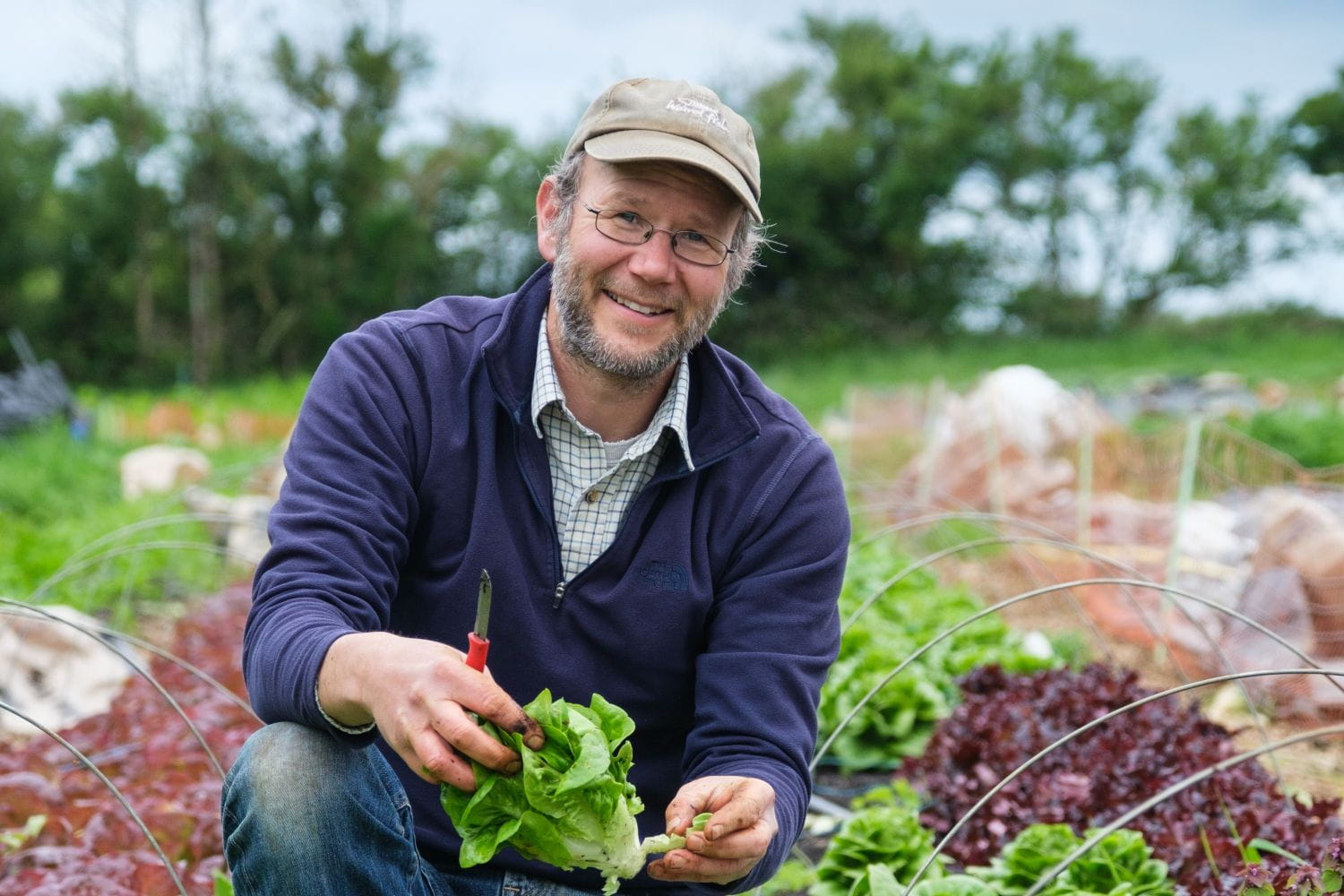
I think funding should be used for transition. It's critical to get past the stage where you're at most risk. I'm very grateful for the SFI funding because it's advantageous for organic farmers in particular.
Learn from other organic farmers
Case studies
Change can mean moving away from the way things have always been done – by you, your team, your neighbours, and maybe your own family.
Even if you're new to farming, friends and family may have strong opinions about how you run your farm. That's why it's essential to talk to other organic farmers, read their stories, and find out what they experienced when they converted to organic.
When I first started in organic, I was almost a little bit scared of putting it out there. We advertised as local, seasonal, and then organic. What surprised me was that after about four to five years, people were coming to us because we were organic. There was a trust behind the brand and the certification process, and I was surprised by how much of a difference that made for us.
Training and events
The Soil Association's Farming and Land Use team attend events and run free webinars where you can learn more about the topics affecting you as an organic farmer.
In the Soil Association Certification team, we run industry events and conferences where you can meet other farmers and learn more about the commercial side of organic farming.
If you haven't already, we recommend signing up to our Organic Farming News emails to stay up to date with our upcoming events. We also recommend the Soil Association charity’s farming newsletter.
Talk to the organic experts
Our small team of Certification Officers know farming and are happy to answer your questions about organic certification. And the Farming and Land Use team within the Soil Association charity can provide information which takes your individual circumstances into account.
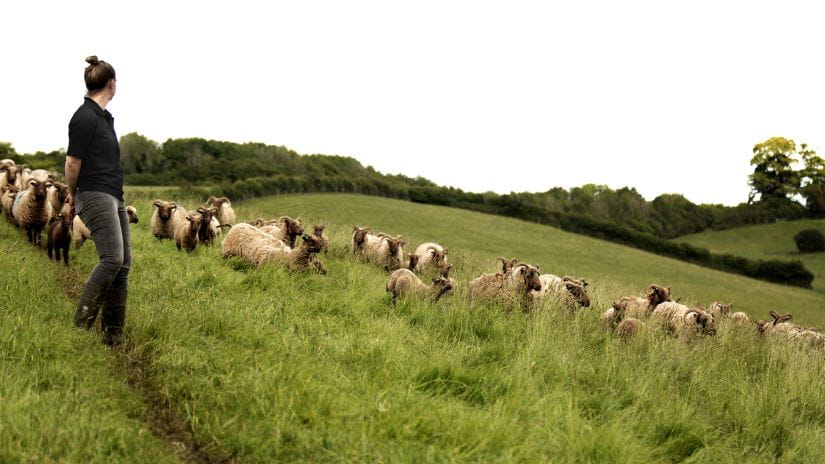
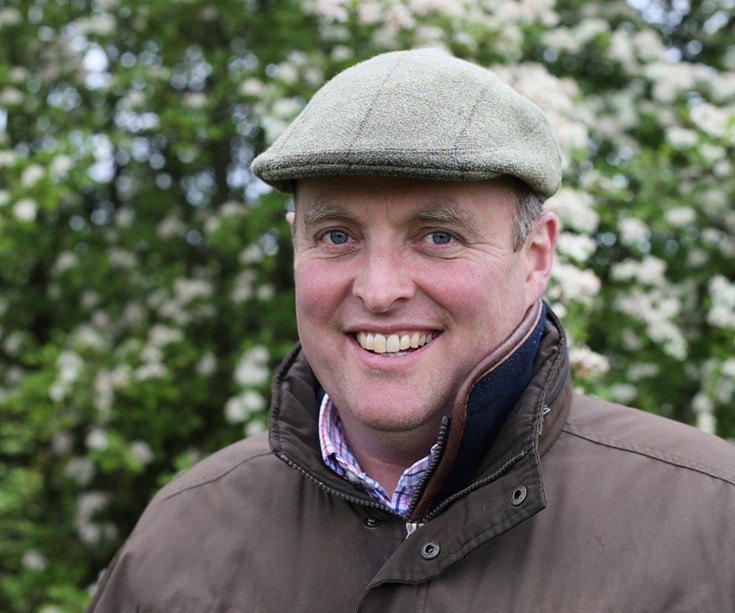
Economically, we are performing even better than our conventional system. However, we’re doing that whilst significantly increasing employment, improving soil quality and biodiversity, and over time we expect profitability to increase further.
Why convert to organic?
Market growth
Our Organic Market Report is a data-backed, comprehensive snapshot of the UK organic market, which we publish annually. In it we cover the opportunities and pressures affecting producers and businesses, consumer awareness and concerns, and offer our future predictions. It is completely free to download.
In our 2026 report the picture is positive overall. The UK organic market is in its fourteenth year of consecutive growth and is now worth £3.9bn, double what it was 10 years ago. Only 3% of UK farmland is certified organic, meaning farming hasn't kept pace with customer demand, making the UK reliant on imports.
Government support
"The overall ambition for SFI remains the same: to support farmers to manage their land in ways that deliver environmental benefits as they produce food." – Defra
The link between farm stewardship and environmental benefits is increasingly recognised by governments. The English Sustainable Farming Incentive (SFI) includes specific organic conversion and maintenance actions.
For many organic farmers, the SFI works well because the scheme rewards the practices they are already carrying out. They are not limited to organic-specific options and can also apply for many standard SFI actions, allowing them to generate additional income from their environmental stewardship and continue to produce food.
Alongside the Soil Association charity, Soil Association Certification champions organic farming at a government, retailer and media level. We are continuing to push for an English Organic Action Plan, building on the success of our work in lobbing for the Scottish Organic Action Plan.
Benefits to your farm
"Organic and agroecological approaches, with the right support, can help build a food system fit for the future." – Soil Association
The Soil Association's 2026 report No drought about it: Farming agroecologically for climate resilience found that healthier soils are more resilient to drought and flooding. Plus, reducing your dependence on synthetic fertilisers, pesticides, and imported livestock feed may provide a buffer in a volatile market.
There is a growing realisation that organic is the best way for us as a country to meet our biodiversity and carbon targets, get nutritious food on our tables, reduce the burden on the NHS... organic ticks so many boxes. With the high cost of synthetic fertilisers and the problems we're seeing in terms of instability in the world, it's a no-brainer.
With increasing visibility of organic in supermarkets and lots of ways to sell direct, healthy consumer demand and increasing policy support, it's a good time for those interested in organic conversion to learn more and consider taking their plans forward.
References
Palma, J., et al. (2007) Modelling environmental benefits of silvoarable agroforestry in Europe
Smith, J., Pearce, B.D., and Wolfe M.S. (2012) Reconciling productivity with protection of the environment: Is temperate agroforestry the answer?
Cumulus (2022) Woodland and trees in the farmed landscape: Towards a diverse, resilient and vibrant agroforestry and farm woodland economy for the UK. Report for Soil Association. Pp. 31-32
Cumulus (2022) Woodland and trees in the farmed landscape: Towards a diverse, resilient and vibrant agroforestry and farm woodland economy for the UK. Report for Soil Association
Alberto Serra